1759 to 1796
Robert Burns
Farmer, father of twelve, collector of traditional music and political radical. Besides all that, Scotland’s pre-eminent poet, whose words are known and quoted the world over.
A life in brief
Thirty-seven years, and a world of words
25 Jan 1759
Born in a clay cottage in Alloway, Ayrshire, the eldest of seven children of a tenant farmer.
1784
The family moves to Mossgiel farm, near Mauchline. Hard years on poor land.
1786
Poems, Chiefly in the Scottish Dialect is printed in Kilmarnock and makes his name.
1787
The Edinburgh edition. Tours of the Borders and the Highlands, passing through Dundee in September.
1787 to 1803
Editor and chief contributor to The Scots Musical Museum, which gives the world Auld Lang Syne.
1788
Takes the farm at Ellisland, near Dumfries, and settles with Jean Armour.
1789
Joins the Excise. Tam o’ Shanter follows in 1790.
21 Jul 1796
Dies in Dumfries, aged 37.
Burns and Dundee
A low-lying but pleasant town
In late August 1787 Burns set off from Edinburgh on a Highland tour with his friend William Nicol. Three weeks later, on the way home, they spent a couple of days in Dundee. It was his only visit. His journal calls it a low-lying, but pleasant town with an Old Steeple: that steeple is St Mary’s Tower, which still stands over the city centre.
The connection runs deeper than one visit. Burns’ father’s family came from the Mearns, the farmland north of Dundee, so his roots were in the North East even if his upbringing was in Ayrshire.
And Dundee has never forgotten him. The city’s Burns Club was founded in 1860, its statue went up in 1880, and a Dundee singer led the Scottish Parliament in his song when it opened in 1999.
Take our Burns in Dundee walk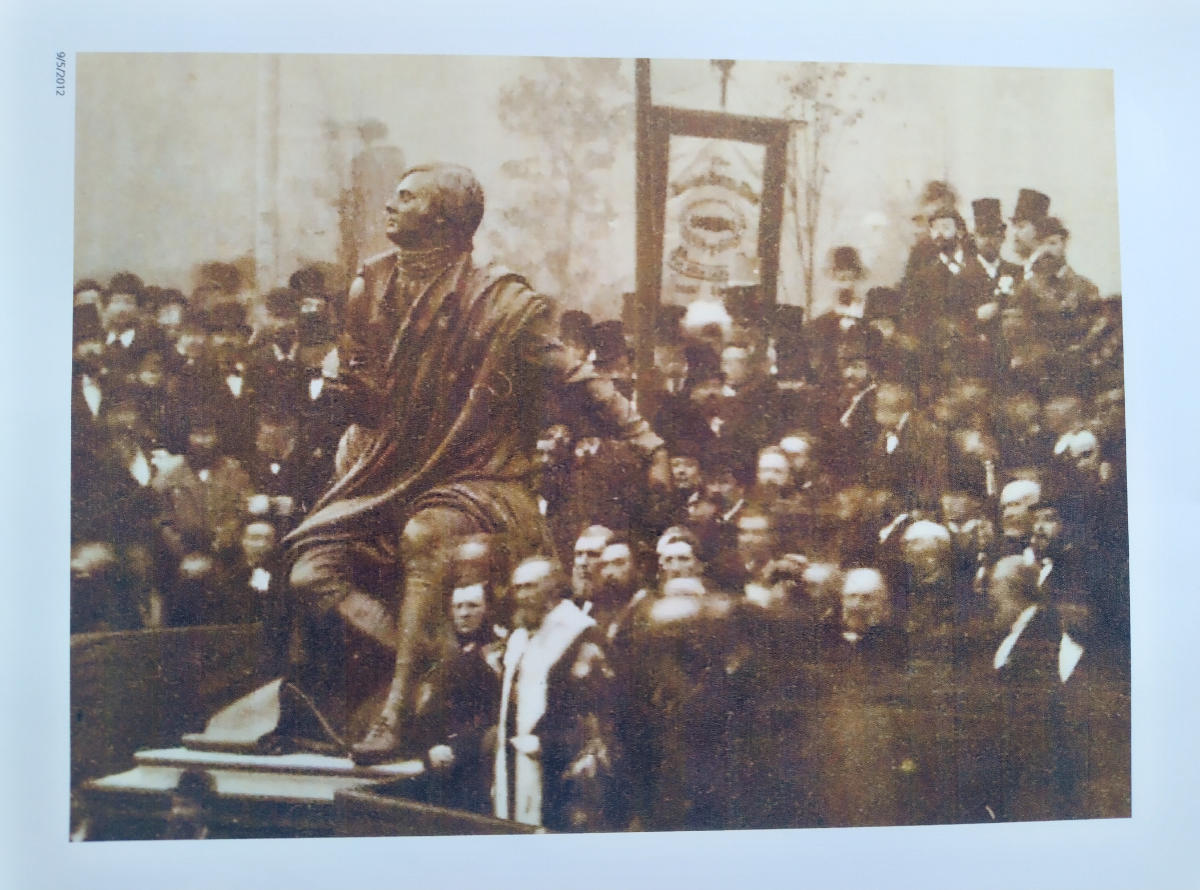
Why he still matters
Language, fairness and love
The Scots tongue
Steeped in the culture of lowland Scotland, Burns wrote in Scots when polite society wrote in English. He collected and reworked around 200 songs for The Scots Musical Museum, and his use of Scots has been crucial to the survival of the language.
A man’s a man
Burns knew real hardship. Poems like The Twa Dugs show a sharp eye for social division and injustice. When the Scottish Parliament opened in 1999, Dundee’s Sheena Wellington, now a member of our club, sang A Man’s a Man for a’ That to the chamber.
The right words
And lovers still turn to A Red, Red Rose when they need the right words to say what they feel. Every Hogmanay, people the world over join hands for Auld Lang Syne.
Where to start
Five to know by heart
1785
To a Mouse
The best laid schemes o’ mice an’ men
Gang aft agley
1788
Auld Lang Syne
Should auld acquaintance be forgot,
And never brought to mind?
1790
Tam o’ Shanter
Nursing her wrath
to keep it warm.
1794
A Red, Red Rose
O my Luve’s like a red, red rose,
That’s newly sprung in June
1795
A Man’s a Man for a’ That
The rank is but the guinea’s stamp,
The man’s the gowd for a’ that.
The Burns Supper
How the night runs
1
Welcome
The chair greets the company.
2
The Selkirk Grace
Said before the meal.
3
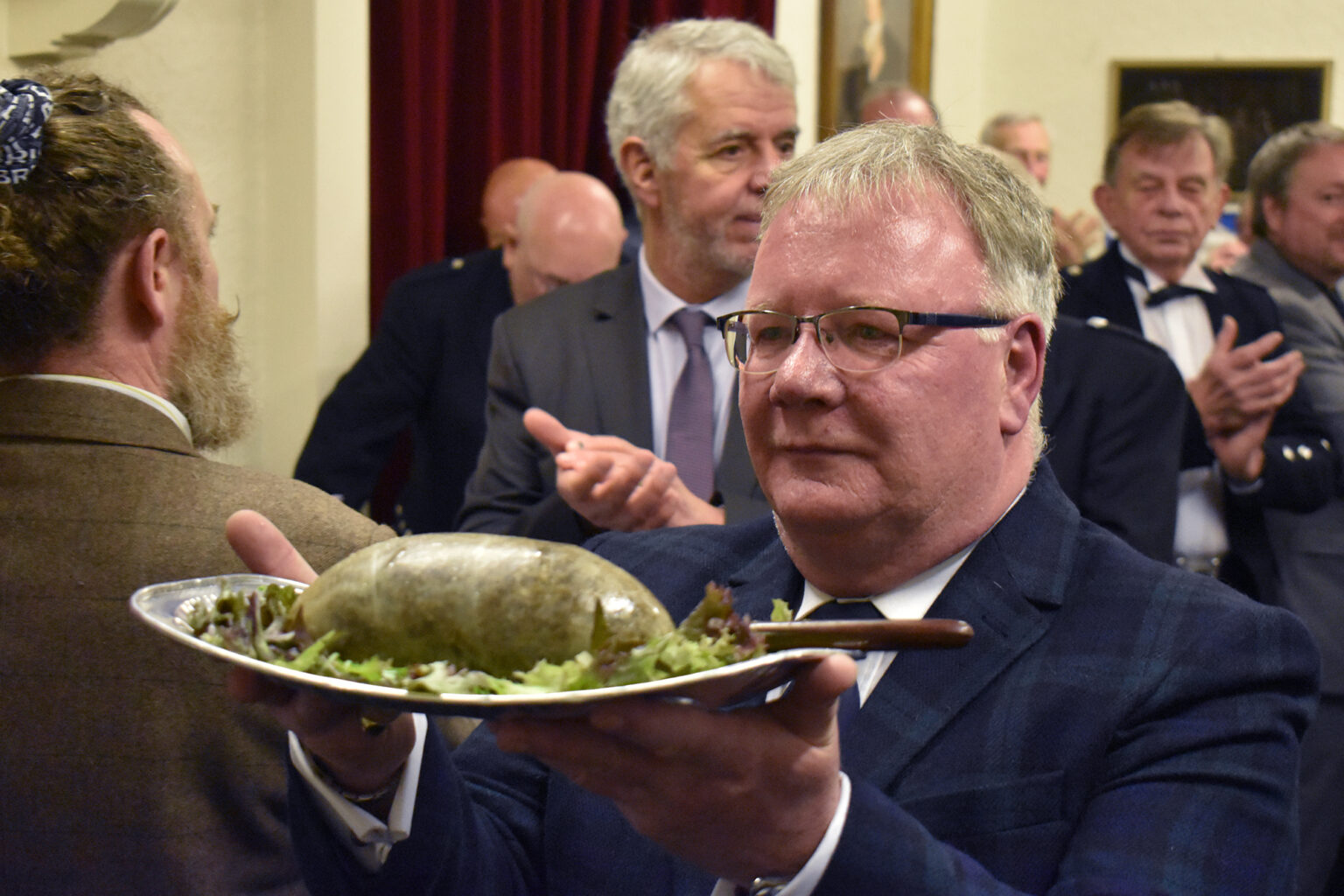
Piping in the haggis
Guests stand as the haggis arrives behind the piper.
4
Address to a Haggis
Burns’ poem, recited with a knife at the ready.
5
Supper
Haggis, neeps and tatties, and a dram.
6
The Immortal Memory
The main speech, on Burns’ life and why he still matters.
7
Toast to the Lassies
Light-hearted, and never short of material.
8
Reply from the Lassies
Usually lands the better jokes.
9
Songs and recitations
Tam o’ Shanter, a song or two, and whatever the company has in them.
10
Auld Lang Syne
Arms crossed, hands joined, to close the night.
The Selkirk Grace
Some hae meat and canna eat,
And some wad eat that want it;
But we hae meat, and we can eat,
Sae let the Lord be thankit.
The very first one
On 21 July 1801, five years after the poet died, nine of his friends met at Burns Cottage in Alloway to raise a glass to his memory. They ate sheep’s head as well as haggis. They planned to meet again on his birthday, but got the date wrong and turned up on 29 January.
Ours since 1861
Dundee Burns Club held its first Burns Supper in 1861 and has held one every year since. Now there are two each January, the Club Supper and the Open Burns Supper, with 34 seats at each.
Burns Night at the club, and how to host your ownDid you know?
His first book, the Kilmarnock edition of 1786, cost three shillings and sold out within a month.
Steell’s statue of Burns sits in New York’s Central Park, Dundee, London and Dunedin. Dundee’s was unveiled just two weeks after New York’s.
In 2009 STV viewers voted Burns the Greatest Scot, ahead of William Wallace and Robert the Bruce.
Burns tried to visit the Carron Iron Works near Falkirk, but the gatekeeper would not let him in.
From our archive
The Immortal Memory, 2020
Read the full speechBurns’ poetry is regarded as being for the people because he was one of the people. So please raise your glasses to toast Robert Burns, the democrat, the radical, the environmentalist, and Scotland’s Bard.
The late Frank Chalmers, a knowledgeable and dedicated friend of the club, at our 160th Annual Burns Supper, 25 January 2020
Celebrate Burns with us
Join the club for first shout on Burns Night seats, our St Andrew’s Night dinner and Sunday music sessions.